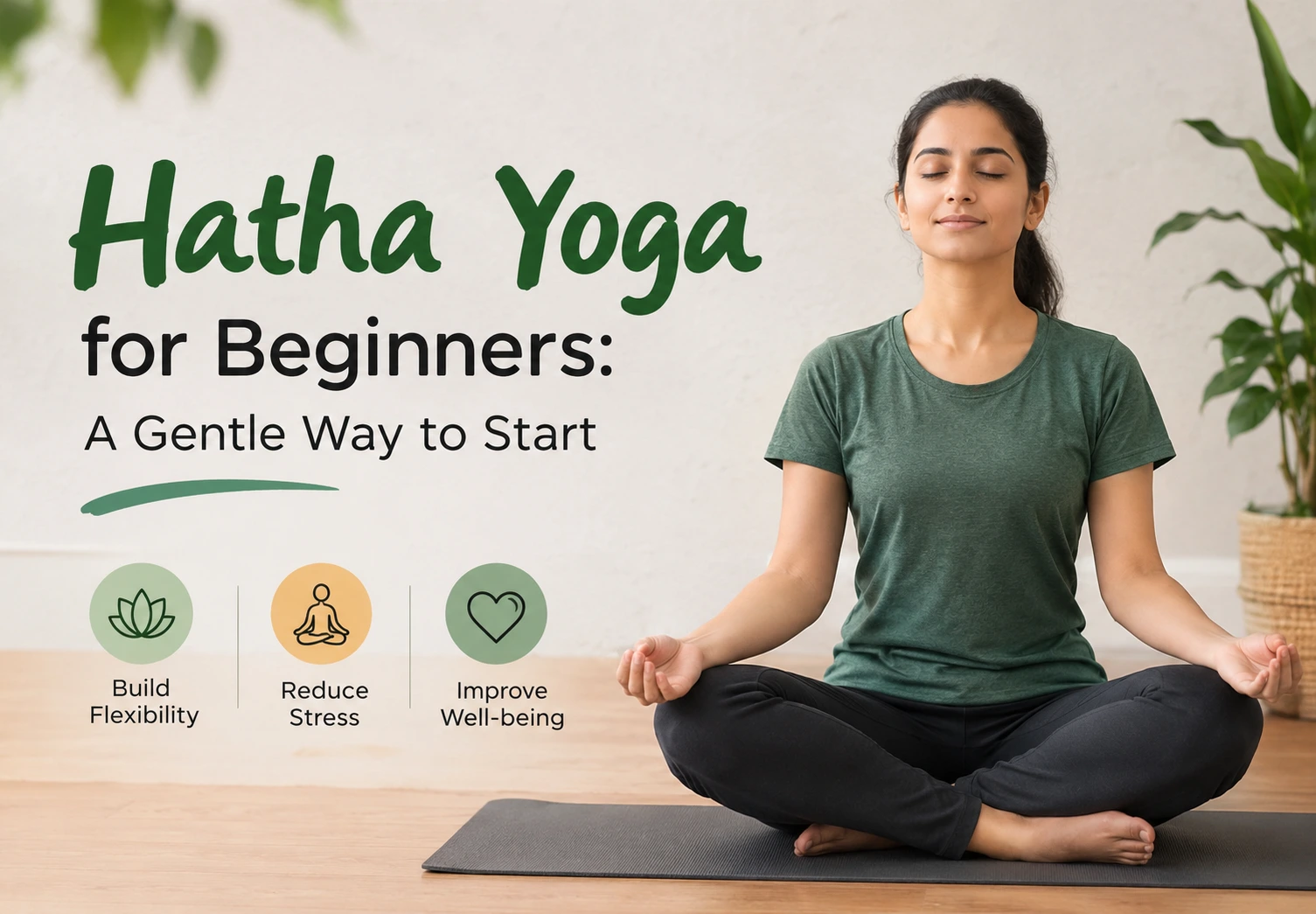
If you've looked at a studio schedule or a class app and seen a wall of style names — Hatha, Vinyasa, Ashtanga, Power, Yin — and had no idea which one to actually pick, you're not alone. For almost every beginner, the answer is the same: start with Hatha.
What Hatha Actually Is
Hatha is the slower, more foundational style that most other styles are built on top of. Poses are held for several breaths instead of flowing quickly from one to the next, which gives you time to actually feel what's happening in your body — where you're tight, where you're unstable, where your form needs adjusting — instead of just moving through a sequence and hoping it's right.
In practice, a Hatha class usually mixes standing poses, some gentle backbends and forward folds, a bit of balance work, and a slower pace throughout. It's not "easy" in the sense of being less effective — it's deliberate, which is exactly what a new practice needs.
Why It's the Right Starting Point
A faster-paced class like Vinyasa asks you to move with your breath through a continuous sequence, which is a genuinely good practice once you know what the poses are supposed to feel like. The problem for total beginners is that it's easy to move through a pose with bad form and never notice, simply because you're already moving to the next one before anyone — including you — can catch the mistake.
Hatha's slower pace removes that problem. You hold Warrior II long enough for an instructor to actually see your front knee is going past your ankle. You hold Triangle Pose long enough to feel whether your hips are actually square. That kind of real-time correction is where good habits get built — or bad ones get caught before they set in.
What to Expect in Your First Class
A typical beginner Hatha class moves through a handful of foundational poses — the kind covered in our guide to 12 basic yoga poses for beginners — holding each for several breaths, with time built in to adjust and reset between poses. There's no pressure to keep pace with anyone else in the room, and modifications (bent knees in a forward fold, a block under your hand in Triangle Pose) are completely normal, not a sign you're doing it wrong.
Classes usually end with a few minutes of stillness — Savasana, Corpse Pose — which can feel strange the first time but tends to become the part people look forward to most.
Hatha and Back Pain
If you came to yoga specifically for back pain relief, this isn't a coincidence — Hatha is also the style we'd recommend there. Our comparison of yoga styles for lower back pain goes into more detail, but the short version is the same reasoning: a slower pace means better form, and better form means the practice actually helps instead of accidentally straining something that's already tight.
Where to Start
Namho Yogis' live online classes are built around Hatha's pacing for exactly this reason — small groups, live correction, and a schedule across EST, CST, and PST so your first class doesn't have to wait for the "right" time to fit your week.